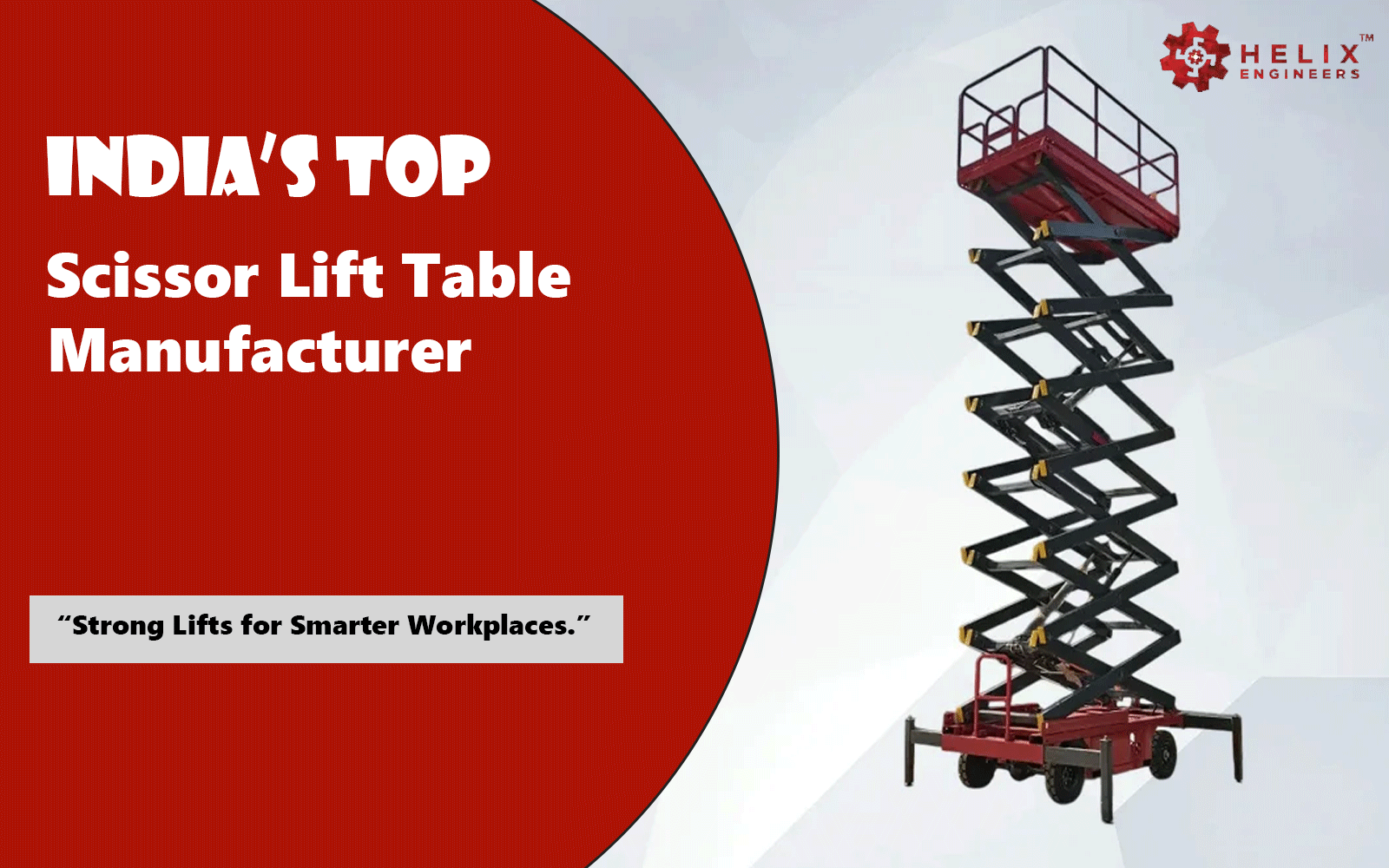
Industrial Material Lifts
In the present industrialized world, which is fast-paced, the core of business success
lies in effective material handling. Industrial
material lifts- single masts, small lifts that are engineered to
handle heavy loads; two masts and scissor lifts are engineered to handle heavy loads
with accuracy. But due to the heavy-duty applications and constant use of these
machines, safety can never be an afterthought.
At Helix Engineers, we mainly focus on safety. Our lifting products are
designed to be robust and safety precautions are incorporated to ensure that they work
safely. But when a lift is introduced, it becomes the operators who are in charge.
These detailed safety guidelines will guarantee a zero-accident environment, and your
long-term investment is safe.
1. Pre-operation: The “Five-Minute Rule”
Safety starts even before the power is turned on. Each shift is to begin with a simple visual
and functional inspection to avoid hours of downtime or even possible injury.
- Clear the Path: Make sure that the lift platform, the pit, and all landing areas are
clear of debris, tools, or packing materials.
- Test Controls: Make sure that the Controls are fully functional: The “Up, Down and
Emergency Stop buttons should be responsive.
- Check the Interlocks: In Mezzanine Goods Lifts, safety gates should lock when the lift
is moving and can only be opened when the lift is at floor level.
- Check Wire Ropes: When operating a Wire Rope Goods Lift, check cables for fraying,
"bird-caging" or rust.
2. Master the Load: Capacity and Distribution
Improper loading is the leading factor that leads to industrial lift failure. Each Helix
Engineers lift is graded to a particular Maximum Weight Capacity (MWC) - and this is not
negotiable.
- Respect the Limit: Overloading causes pressure to hydraulic seals and motors, as well
as the safety brakes. In marginal cases where the load is marginal, split the load into
two trips.
- Centre the Load: An off-centre load is not safe. In a Single Mast Goods Lift, it
produces a lever effect that can bend the mast. It causes imbalanced pressure to the
synchronization mechanism in a Dual Mast system. The heaviest objects should always be
in the middle of the platform.
3. Personnel Safety: “Goods Only” Means Goods Only
One of the most important rules of industrial logistics: Material lifts are not lifts of
people but lifts of materials. No person should ever be allowed to ride on the platform
unless it is a lift that is specifically known to be a Passenger-Goods Lift with enclosed
cabins.
- No Hitchhiking: Never take the lift to save time.
- Signage: Make sure that the signs in place saying No Riders on all floors are readable
so they cannot be used by unauthorised personnel.
4. Operational Protocols and Smooth Movement
The way an operator treats the lift during transit is equally important as is the way he or
she loads it.
- Do not make Sudden Moves: Jerky operation (hitting the buttons repeatedly) may make
loads move and force the mechanism. Gradual acceleration and deceleration should be
through smooth controls.
- Correct Levelling: Make sure the lift is exactly at the same level as the floor, then
roll a pallet jack onto the platform. The step-offs or gaps may make the jacks tip,
resulting in broken toes or broken inventory.
- Emergency Stop Use: Only used in an emergency. Making it a regular stop button puts
undue pressure on the braking system.
5. Environmental Awareness and Clear Surroundings
The space around the lifting is included in the safety area. A clutter-free workspace is
essential for safe operation.
- Lighting: Landing points shall be adequately lit to enable operators to tell the
position of the platform and any possible elements that can create a trip hazard.
- Communication: Light signals or floor-call indicators shall be used in noisy places to
ensure that workers on other levels are aware of a lift in operation.
- Protection Barriers: Guarantee that guardrails and kick-plates are in place so that
objects may not slide down into the lift shaft.
6. Maintenance as a Safety Strategy
A lift that is not well-maintained cannot be a safe lift. Helix Engineers suggests that a
regular maintenance program should be adopted to achieve long-term performance:.
- Monthly: Grease moving parts (guide rails, bearings) and verify the level of hydraulic
oil
- Quarterly: Test electrical connections, wiring and limit switches.
- Annually: Carry out full load test and professional structural audit.
Should a lift produce an odd grinding sound, or vibrate too much or drift (slowly sinks after
stopping), close it down and label it Out of Service.
7. Operator Training and Emergency Preparedness
The safety of a lift is just as safe as the individual who is pressing the buttons. Training
of the employees, both permanent and temporary, should be conducted on the model being used.
- Model-Specific Training: It is impossible to operate a Wire Rope Lift in the same way as
a Scissor Lift.
- Emergency Procedures: All workers must be familiar with the manual way to lower the lift
in case of a power failure, and also have knowledge of where all emergency stops are
located.
- Authorised Access: Limit access to operational zones in order to have only trained staff
operating the machine.
Conclusion: Partnering for Productivity
Vertical transportation safety is not about slowing down; it is about not stopping. One
accident can result in legal obligations, spoiled inventory and the most precious thing your
people.
With these tips and by selecting high-quality engineering at Helix Engineers, you will
produce a high-speed, high-safety workplace. We assist your business to stay reliable and
efficient with the development of highly advanced solutions that are aimed at satisfying the
requirements of the contemporary industry.