How to Choose the Right Goods Lift for Your Industrial Facility
Moving heavy items from one level to another can be very challenging for factories, warehouses and business organizations. Manual moving will be demanding and may be a risk to the health and safety of the employees. A lift of goods enables vertical movement and ensures easy and organized movement.
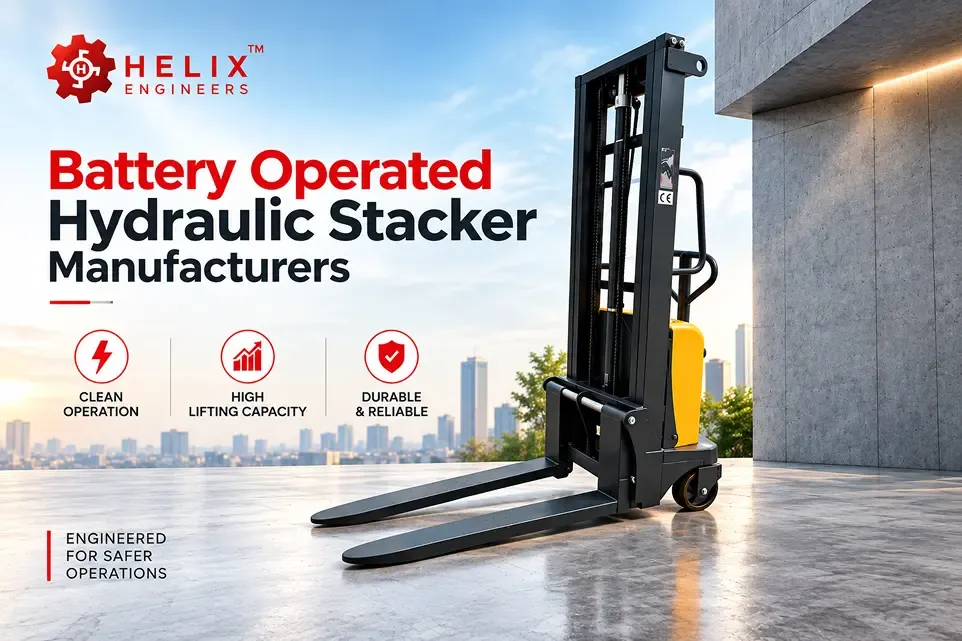
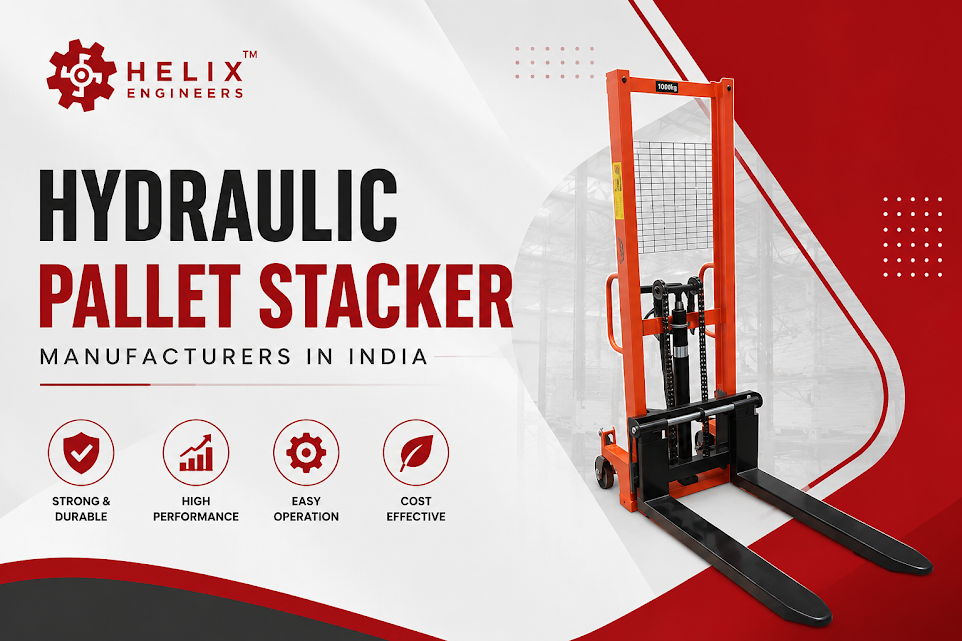
Helix Engineers, as an experienced goods lift manufacturer, offers material handling equipment for industrial applications, helping businesses move goods efficiently between different levels. Selection of lift equipment depends on the nature of goods being moved, their load capacity and the distance to be travelled. This knowledge will guide business organizations while selecting equipment.
Where Are Goods Lifts Used?
Goods lifts are useful in workplaces where materials need to move between floors regularly. The applications will differ based on the layout and handling needs of the facility.
- Warehouses: Goods lifts help move cartons, packed products, and palletised materials between storage levels.
- Manufacturing units: Raw materials, components, and finished products can be transferred between production areas and storage floors.
- Mezzanine floors: Businesses can use a suitable lift to move goods to elevated storage platforms without carrying them manually. See our Mezzanine Goods Lift.
- Logistics centres: Lifts support the movement of packages and other materials between different working levels.
- Commercial buildings: They can be used to transport supplies, stock, and equipment where vertical goods movement is required.
The lift should be selected according to the load and the intended application. A system designed for small packages may not be suitable for heavy industrial materials.
Important Factors to Consider Before Buying a Goods Lift
Before reaching out to the goods lift manufacturer regarding their product range, businesses must assess their need for material handling. This assessment would help in choosing the right lift for the job at hand and that would fit within the available space as well.
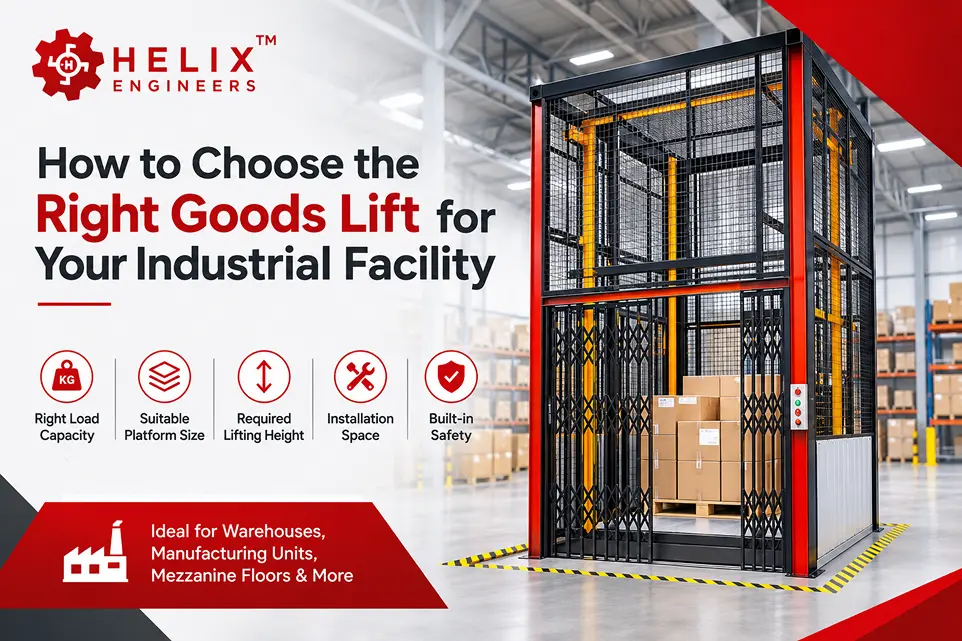
- 1. Load Capacity: Among the first factors to evaluate is the load capacity of the chosen lift. Businesses need to estimate the maximum load that would be transported. This will enable the selection of an appropriately rated goods lift and the use of the same within its specified capacity.
- 2. Platform Size: The platform should have adequate space to place the goods being transported. This depends on the largest size of the goods to be carried, the size of the pallet used and the process involved in loading and off-loading materials from the platform.
- 3. Lifting Height and Levels: The distance between the two points of loading and off-loading also determines the lift design. Businesses need to determine the height to be lifted and the levels the lift is expected to serve to identify the suitable design.
- 4. Installation Space: Installation space determines the kind of lift that a business opts to purchase. Businesses are supposed to analyse this. The installation arrangement should suit the building and the movement of goods around it.
- 5. Safety Features: Safety is important whenever heavy materials are lifted. Depending on the design, relevant features may include limit switches, overload protection, emergency stop controls, and safety gates or interlocks. It is recommended that operators follow the manufacturer’s guidelines and use the lift for its intended purpose only.
Hydraulic and Wire Rope Goods Lifts
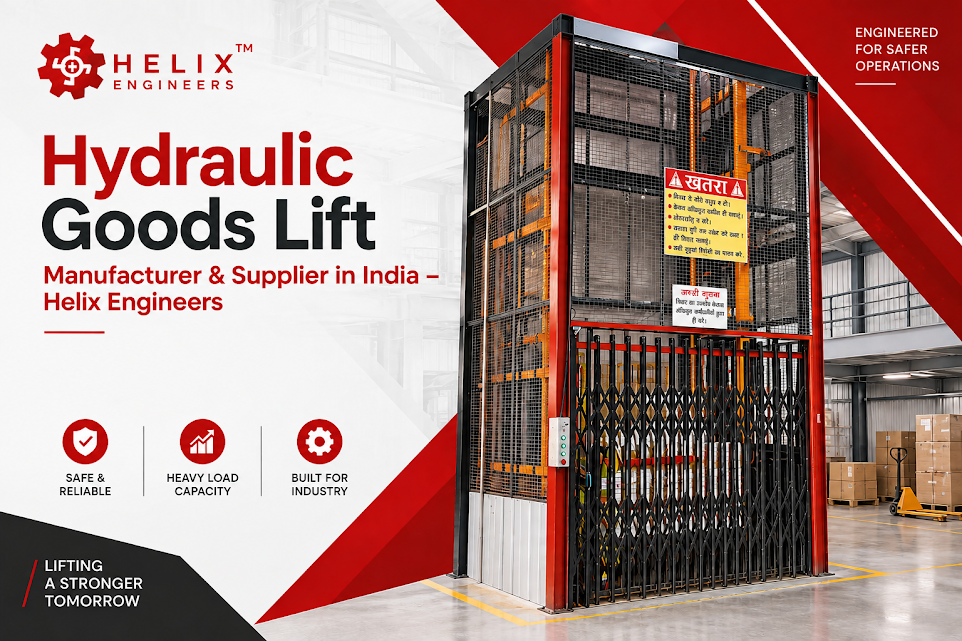
Different lifting mechanisms may suit different operating conditions. Hydraulic goods lifts use a hydraulic system to raise and lower the platform, while wire rope goods lifts use a wire rope-based lifting arrangement.
The right option depends on factors such as load requirements, travel height, building layout, and operating frequency. Businesses should discuss these details with the manufacturer rather than choosing a system based only on its price.
Why Choose the Right Manufacturer?
The right goods lift manufacturer should know the demands of the site and be able to recommend a proper configuration. Things like the size of the platform, the height of lifting, and the weight capacity of the lift need to be considered before ordering.
Helix Engineers provides goods lifts together with other material handling equipment for industrial uses. Providing proper information regarding the purpose of the lift will assist them in understanding the demand.
Conclusion
A material lift makes transporting materials up and down in a warehouse, factory, or commercial establishment more convenient. Nevertheless, the machine has to be appropriate for its capacity, platform size, lift height, area available for installation, and safety considerations at work premises.
Talk to the experts at Helix Engineers about your material handling needs and get the best material lift for your business.
Frequently Asked Questions (FAQs)
- 1. What is the use of goods lift?
Goods lifts are meant to convey goods, equipment, and other products from one floor to the next.
- 2. What kind of goods lift do I need?
Think of the maximum weight that you will carry in the goods lift – goods/payload and the container/pallet.
- 3. Can I put the goods lift in a warehouse?
Yes. You can put a goods lift in a warehouse (together with a building layout).
- 4. How does a wire rope goods lift differ from a hydraulic goods lift?
A hydraulic lift makes use of hydraulic power while the wire rope goods lift uses wire rope mechanism to move the platform vertically.
- 5. What is the safety device that should be incorporated in the goods lift?
Any goods lift can be fitted with overload protection, limit switches, safety gates or interlocks, and an emergency stop button, depending on the type.